Pallet point of sale display design for Bunnings
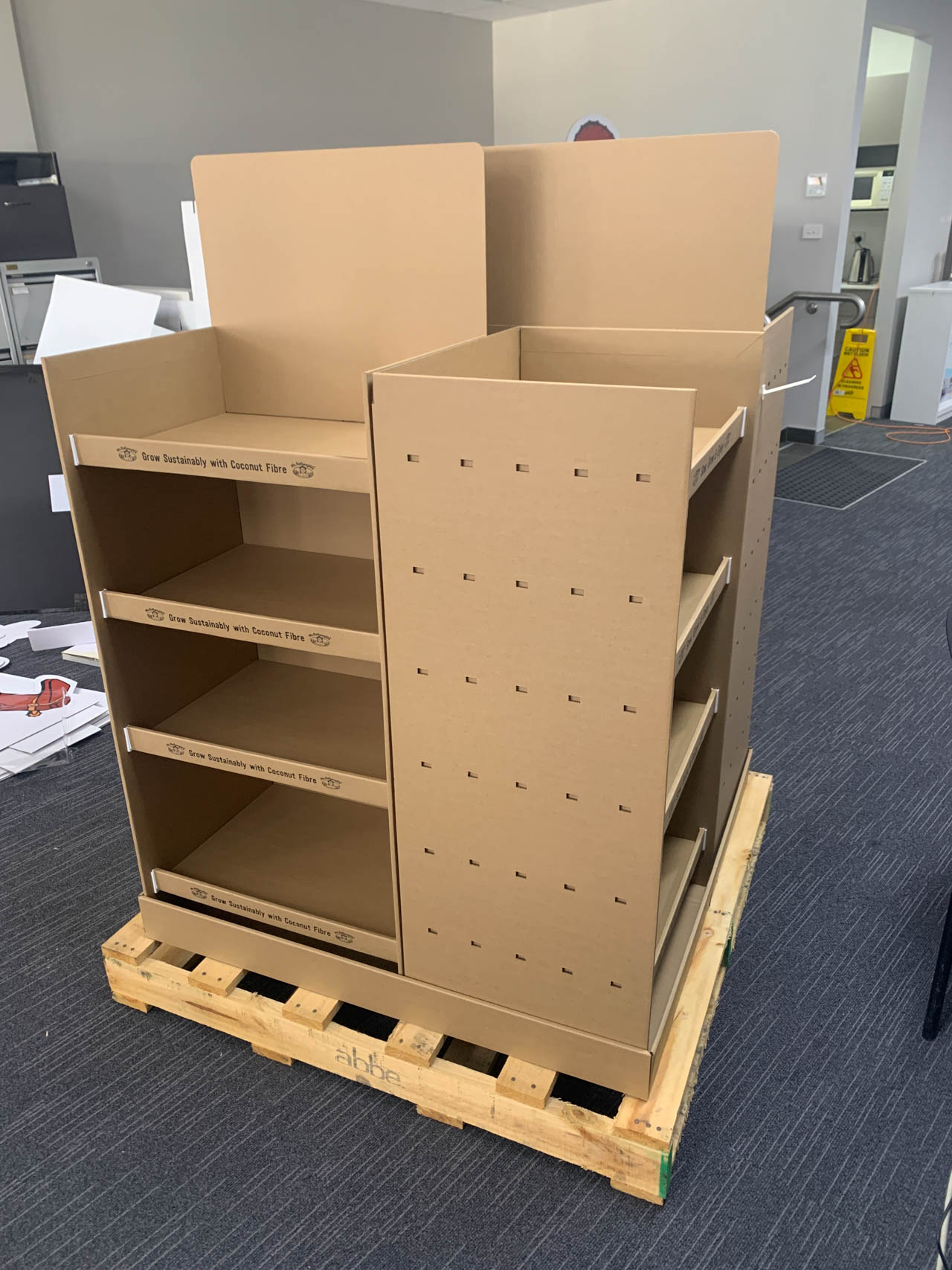
Custom designed cardboard point of sale for Mr Fothergill's products
Genesis Retail Displays is a point of sale display design agency in Sydney that was engaged by Mr Fothergill’s, a trusted gardening brand known for making growing at home simple and accessible.
Their range of all-in-one gardening kits removes the guesswork for consumers by including everything needed to grow herbs, vegetables, and flowers from seed.
Beautifully packaged and easy to use, these kits are also ideal gifts designed to deliver value long after purchase as they grow into something customers can enjoy for months.
Mr Fothergill’s engaged Genesis Retail Displays to design and produce a full pallet display for their first off-location activation within Bunnings.
The objective was to create a strong visual presence outside the core gardening aisle, capture seasonal gifting demand, and make it easy for both novice and experienced gardeners to choose the right product quickly.
The cardboard point of sale display design concept
From the outset, commercial performance was a key driver. The pallet footprint needed to maximise stock volume while keeping product selection clear and unintimidating for shoppers. This was particularly important given the wide variety of product packs within the range.
The display also needed to perform in a high-traffic, warehouse-style retail environment, where durability, stability, and ease of handling are critical.
Several challenges shaped the design approach;
- The unit needed to be constructed from cardboard while supporting relatively heavy products.
- Accommodate multiple pack sizes.
- Meet strict logistics and pallet height constraints for distribution.
- Allow for quick, simple assembly in-store.
All of this had to be delivered to a tight timeline aligned with the peak growing and gifting season leaving no room for error.
Genesis addressed these challenges through a robust design and testing process. A non-negotiable quality assurance step involved weight testing with real product, enabling us to identify structural requirements early.
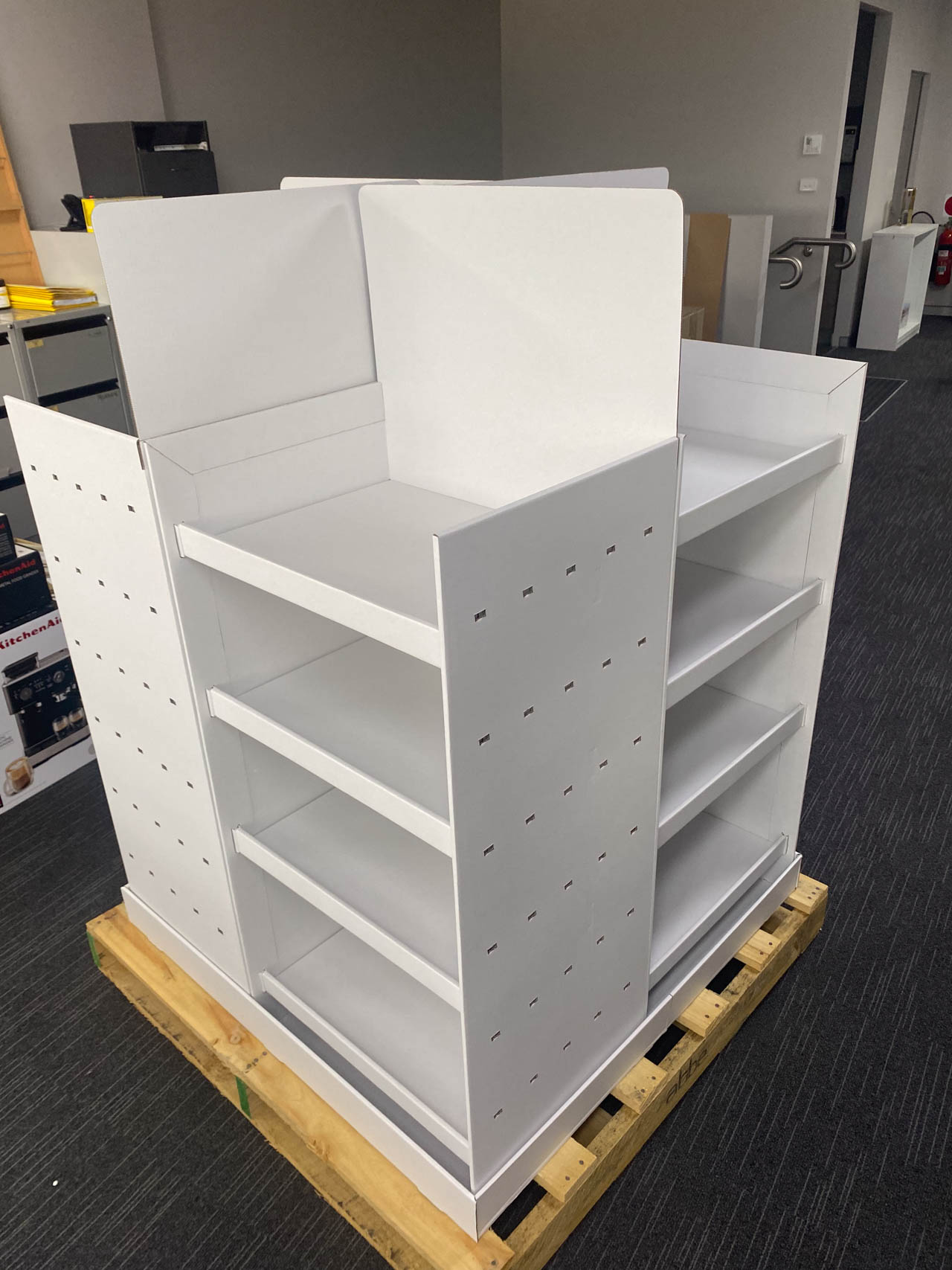
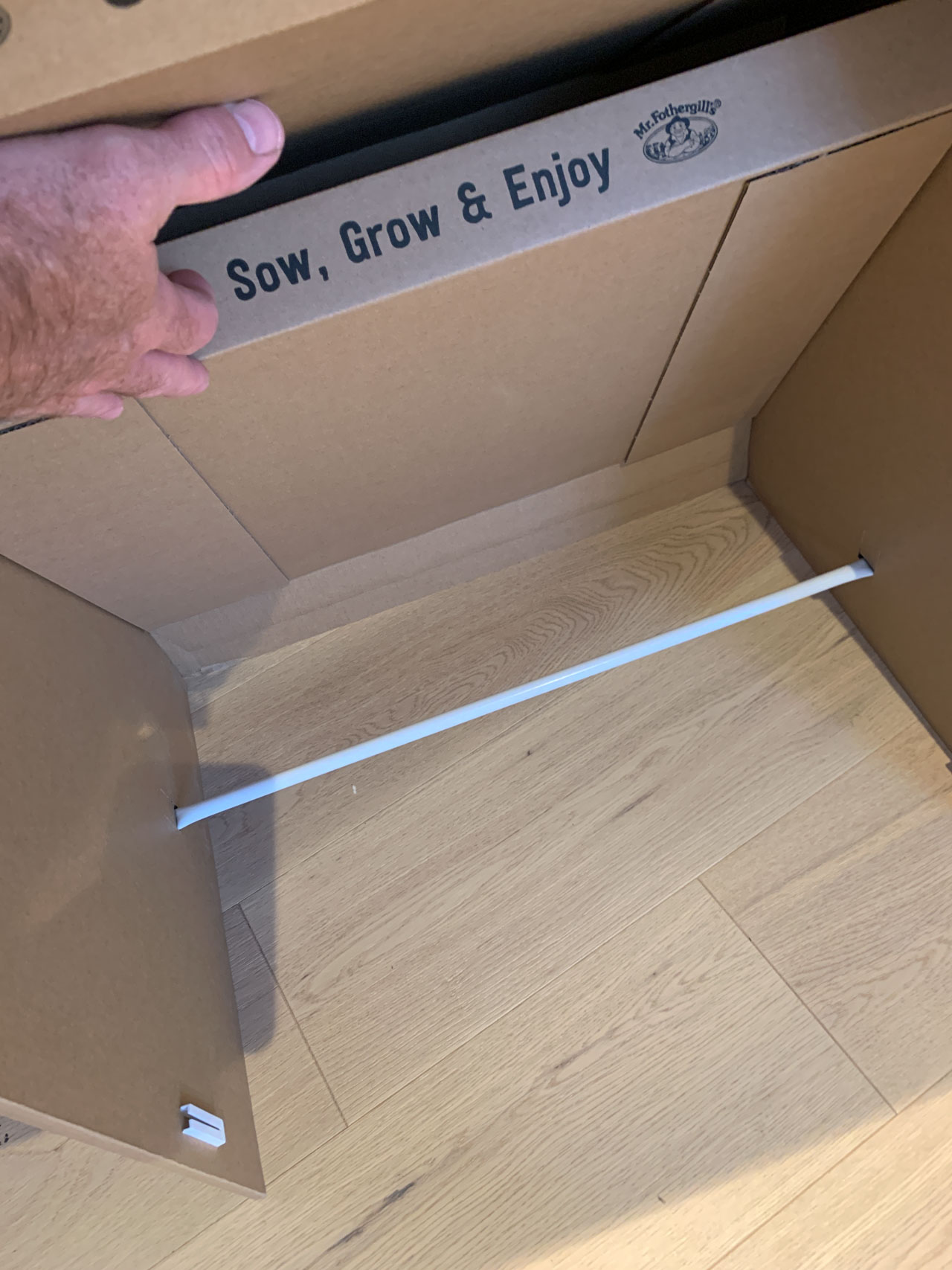
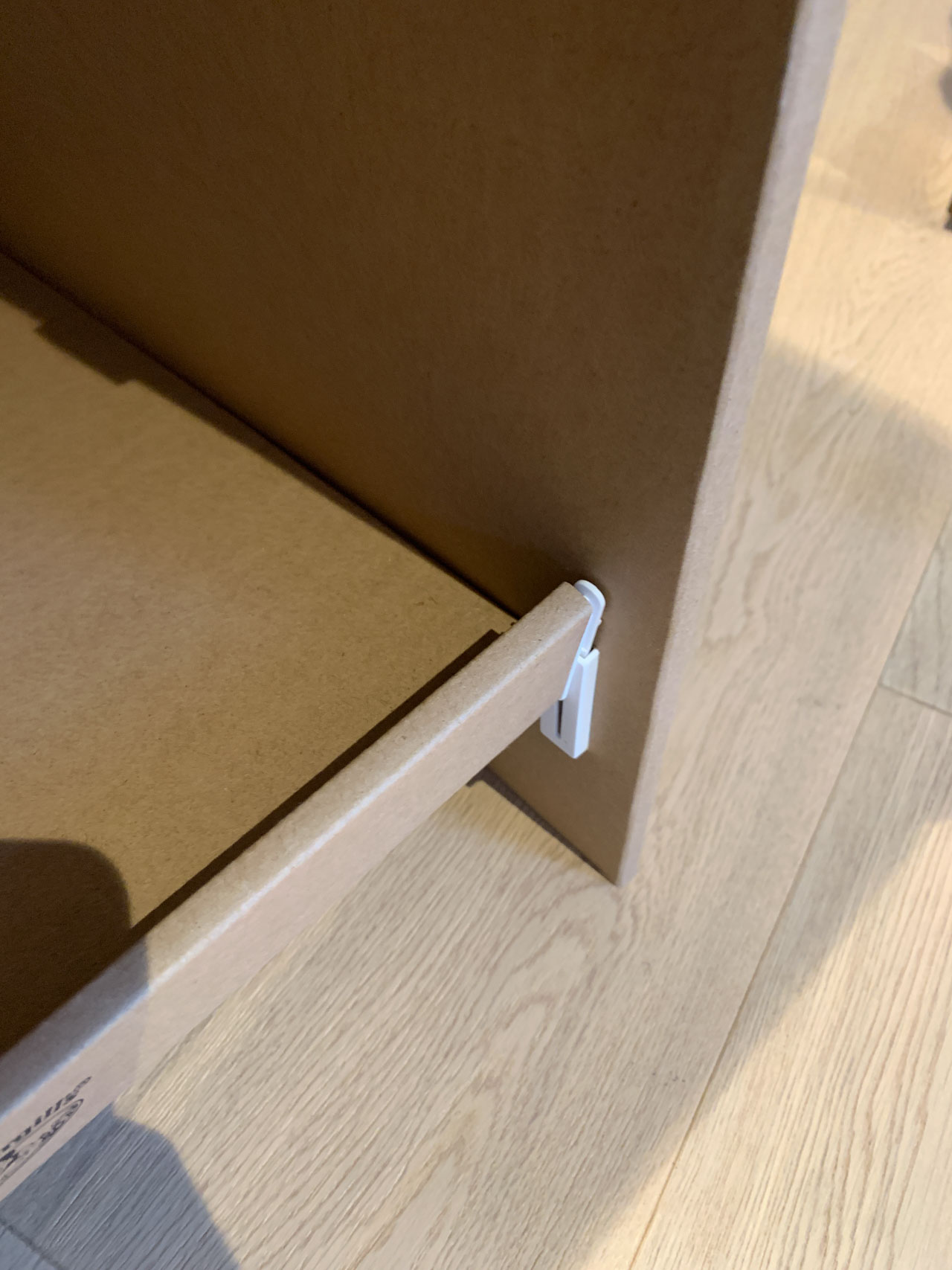
To ensure strength and longevity, the display was engineered with additional internal board layers and reinforced with metal shelf support bars, delivering the stability required for a full pallet format without compromising efficiency or presentation.
Weight testing with real, fully loaded products is a critical step in ensuring every display performs exactly as intended in a live retail environment.
Rather than relying solely on theoretical load calculations, we physically stress-test each unit to identify pressure points, flex areas, and long-term fatigue risks. This process informs structural refinements specific to the product range and retail setting.
In this case, we reinforced the internal structure with additional layered board and integrated metal shelf support bars to distribute weight evenly and prevent bowing or collapse.
It’s this level of considered engineering that sets Genesis Retail Displays apart, every design is purpose-built for the product, the environment, and the commercial objective.
The result is a display that remains functional, safe, and structurally sound throughout its lifecycle, protecting both the brand’s investment and the retailer’s shop floor standards.
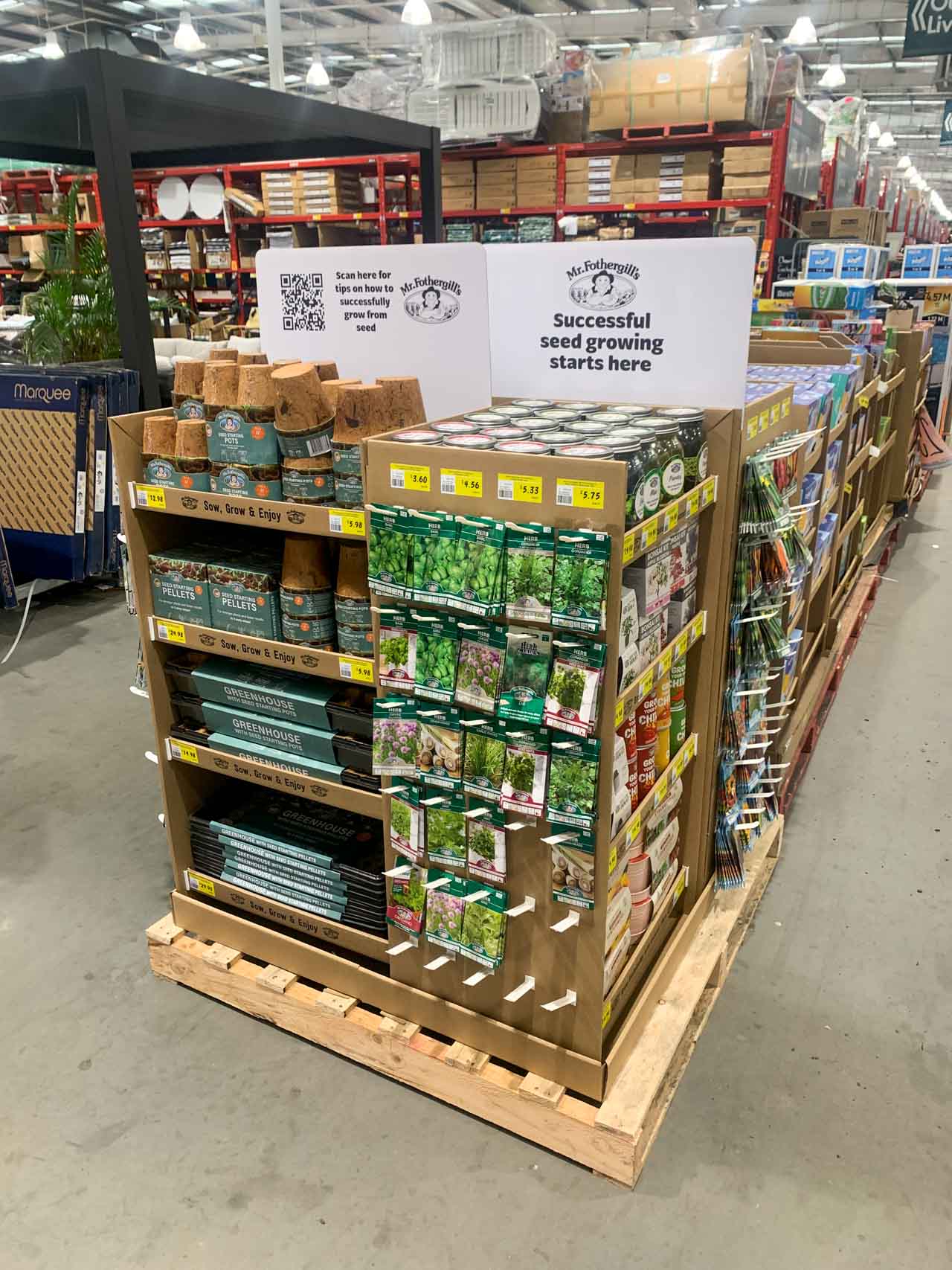
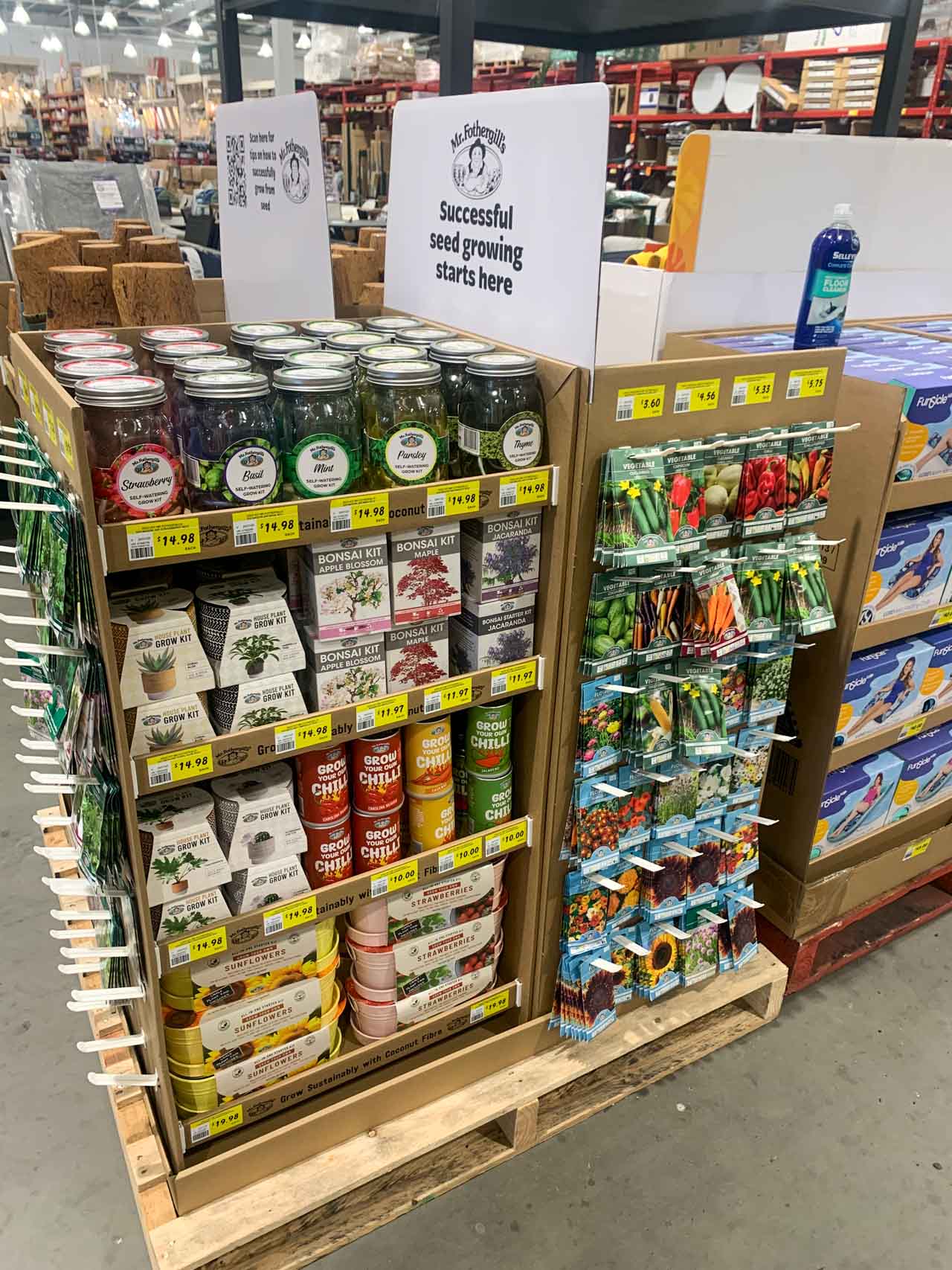
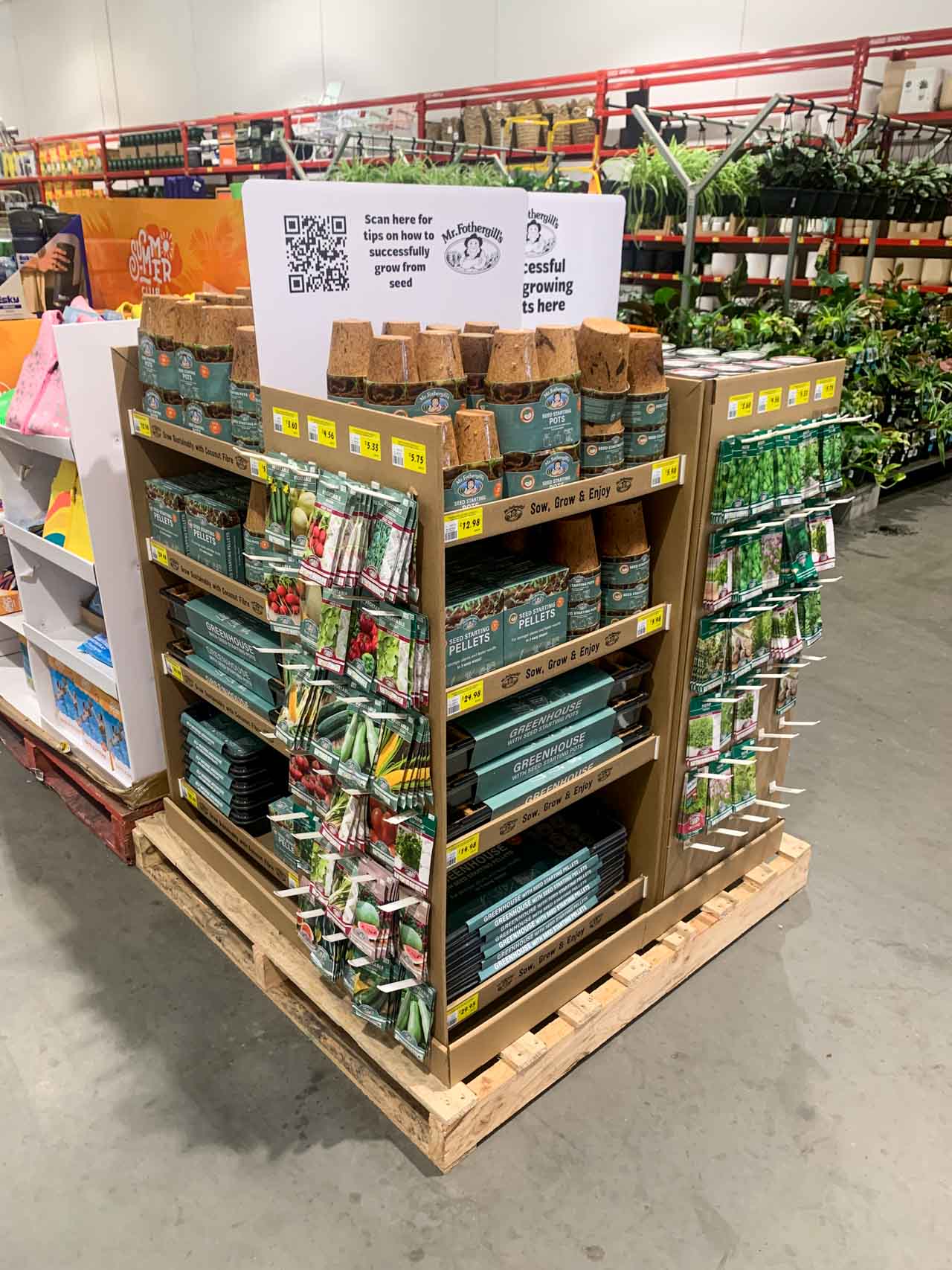
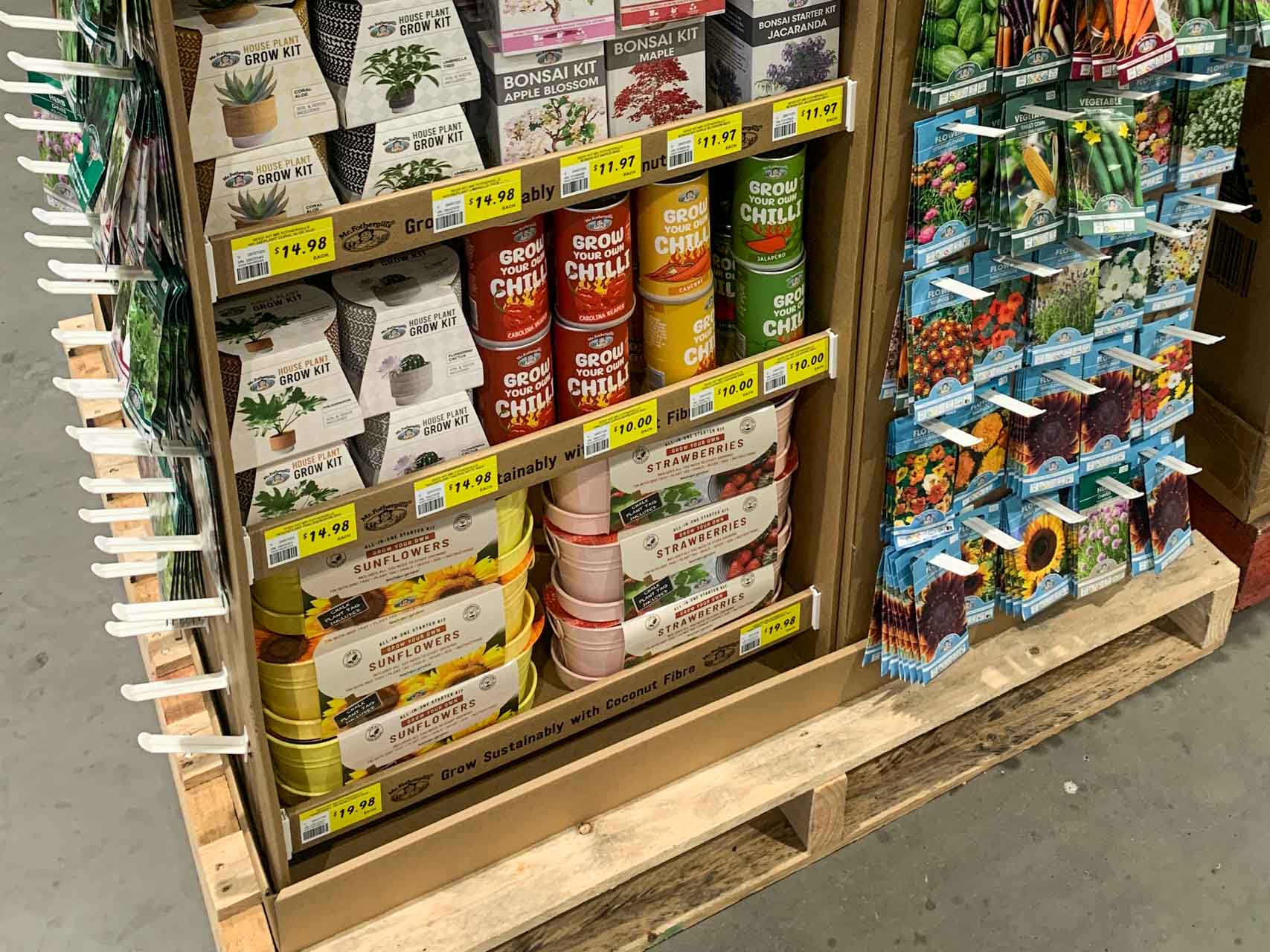
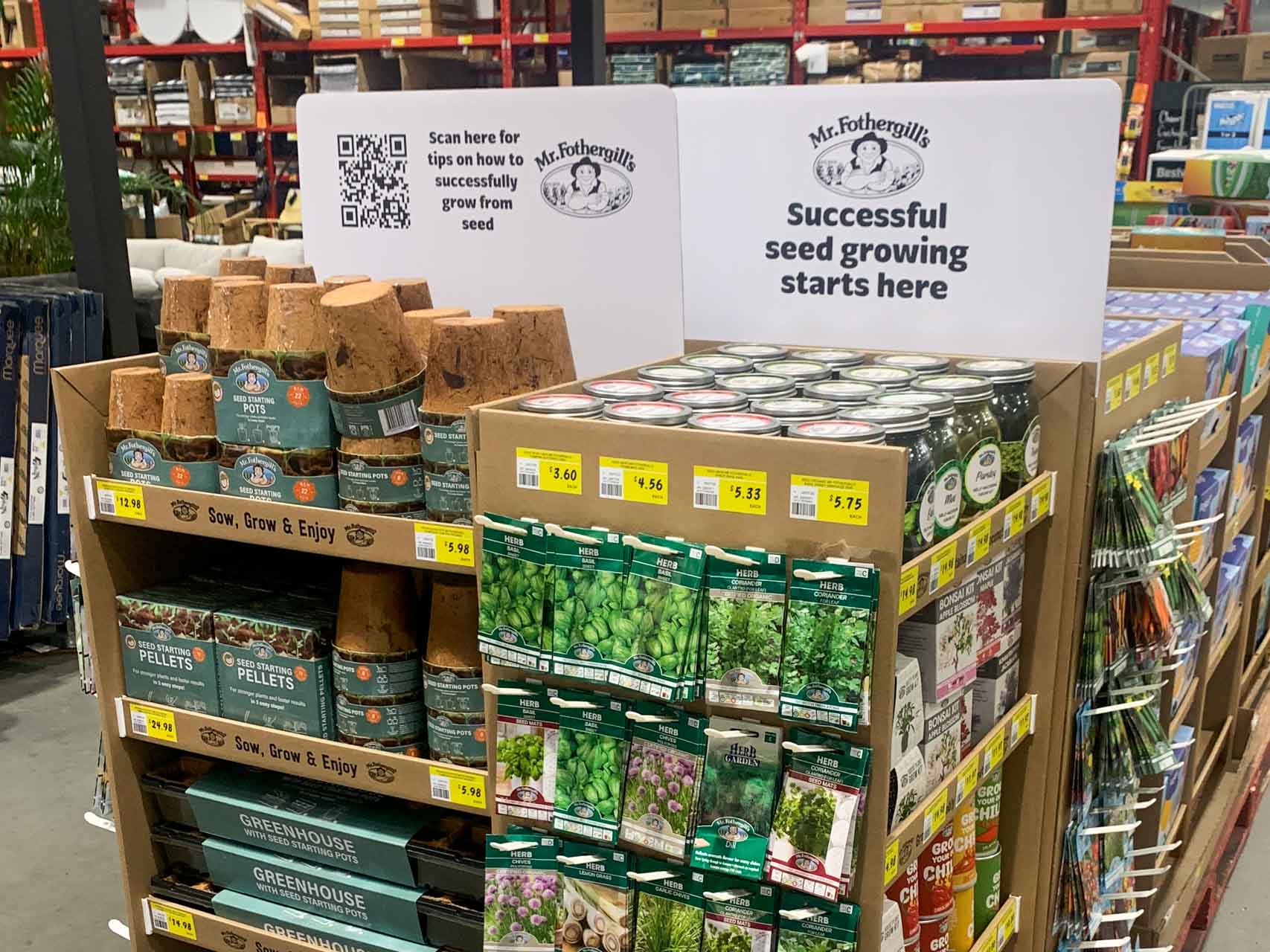
The pallet point of sale displays set up in Bunnings
Designing point-of-sale displays for a retailer such as Bunnings presents a distinct set of challenges compared to traditional supermarket or speciality retail environments.
As a large-format, warehouse-style retailer, Bunnings stores are characterised by high ceilings, wide aisles, concrete floors, pallet racking and constant trolley traffic.
Displays must be structurally robust enough to withstand frequent handling, bulk product weight and occasional impact, while still maintaining a clean and professional brand presentation.
Height restrictions, pallet configurations and strict merchandising guidelines must also be adhered to, particularly when displays are positioned off-location.
In addition, the visual environment is highly utilitarian, meaning a display must work harder to stand out against industrial fixtures and large-scale signage.
Successful POS design in this setting requires a careful balance of strength, compliance, logistical efficiency and strong visual blocking to ensure the unit performs commercially without compromising durability or safety.
As you can see in the photos above, the final display was successfully deployed across Bunnings stores throughout Australia and New Zealand, delivering strong off-location visibility and simplified product choice at scale.
The “Sow, Grow & Enjoy” activation generated significant sales uplift, leading to further opportunities for Mr Fothergill’s within the retail network.
Just as importantly, it introduced thousands of new and novice gardeners to the benefits of growing their own produce at home demonstrating how well-executed retail design can drive both commercial outcomes and customer engagement.
Do you have a product that you need help with to get more visibility, better demonstrability or increased sales?
Let’s make a display that sets you apart.