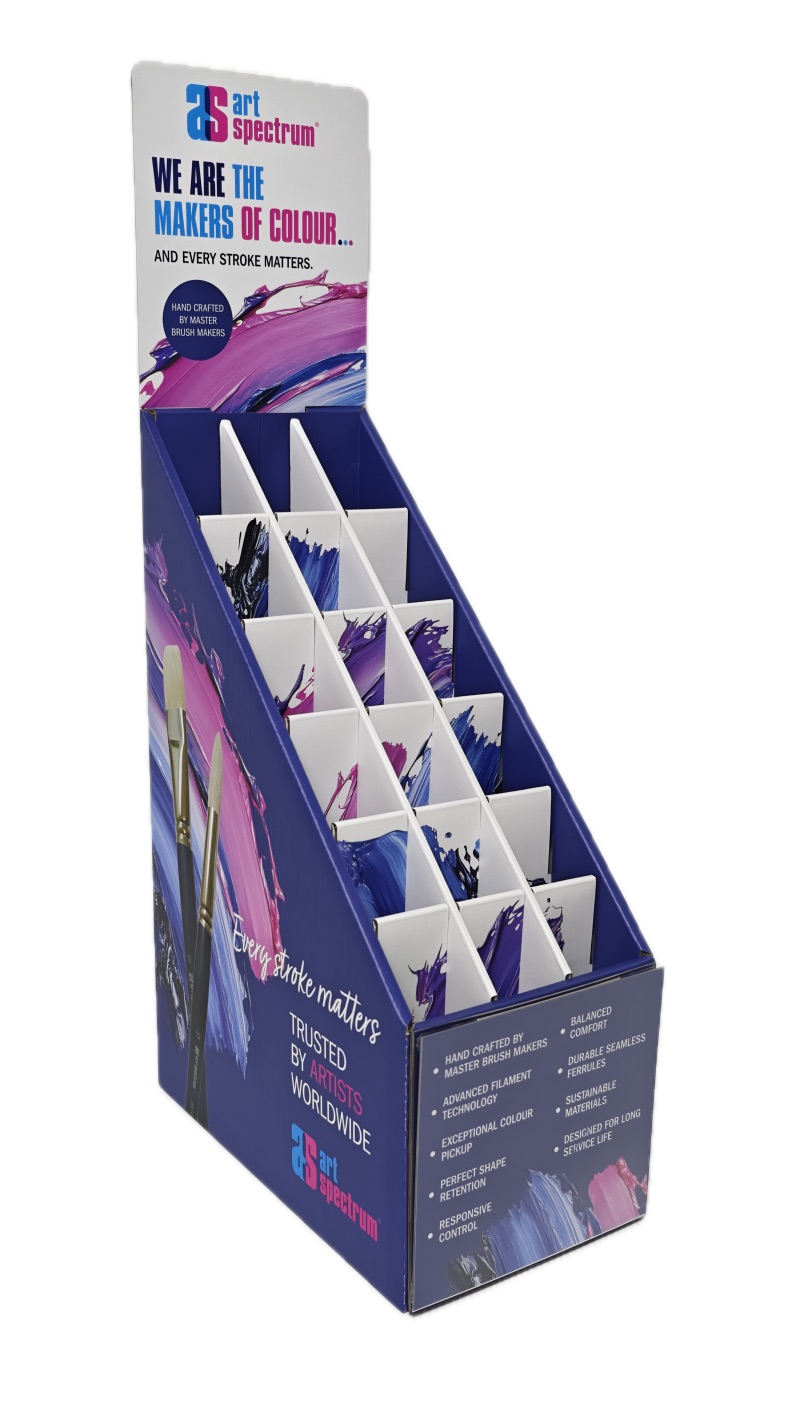
Cardboard paintbrush display for Art Spectrum
Printed counter displays in two sizes for art supply retailers
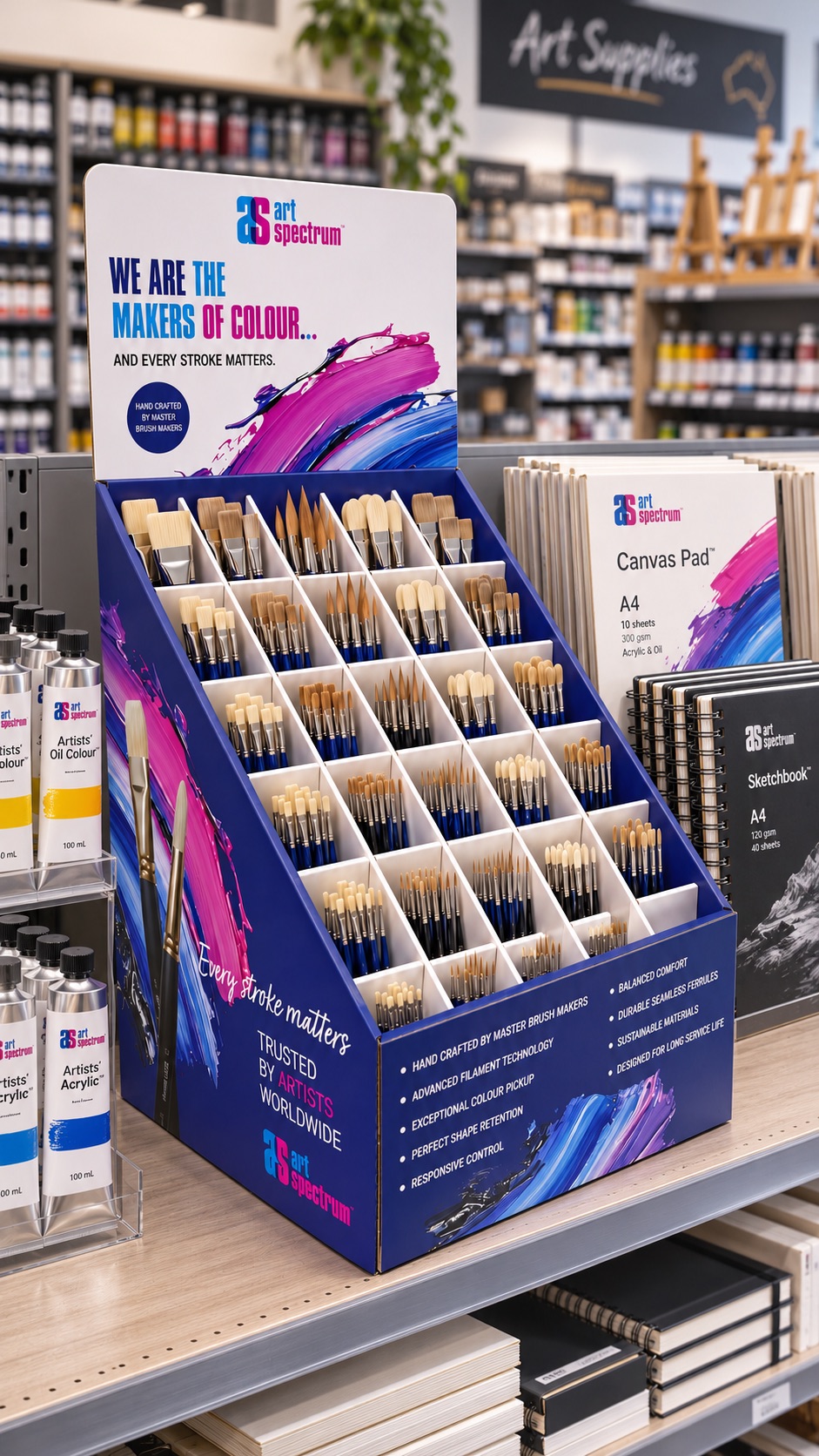
Art Spectrum is an Australian maker of artists’ paints, brushes and surfaces. The brand came to us with a problem many suppliers will recognise: its in-store displays cost too much to buy and too much to send to stores.
Paintbrushes are not high-volume sellers like groceries in a supermarket. An artist might buy a few brushes at a time, a few times a year. So a brush display has to pay for itself over a slow sell-through, and every dollar spent on it has to justify itself.
The problem is most displays cost more than they earn
For years Art Spectrum had used permanent wooden displays as their default. They were robust, but they were expensive to make, heavy to freight, and a plain timber box did little to stop a shopper walking past in a store full of colour and special offers.
That left the brand paying a premium for a display that offered no real impact in store. Across a national network of art supply retailers, that cost adds up: in lost opportunities, poor brand recognition and, most likely, poor stock turns.
Eventually the retailer starts asking why the display is taking up space.
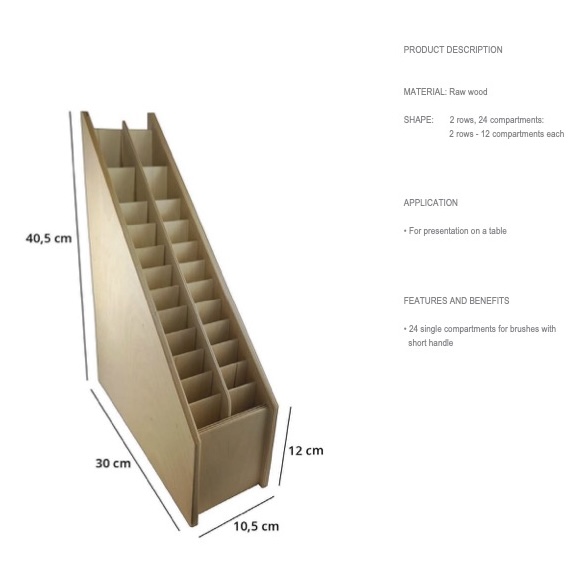
Our approach was to design a display in printed cardboard
We moved the display away from wood to printed corrugated cardboard. That one change achieved three things at once.
It cut the cost of each display
Cardboard costs far less to produce than timber, so the cost of each unit dropped sharply, by 60%.
It turned the display into advertising
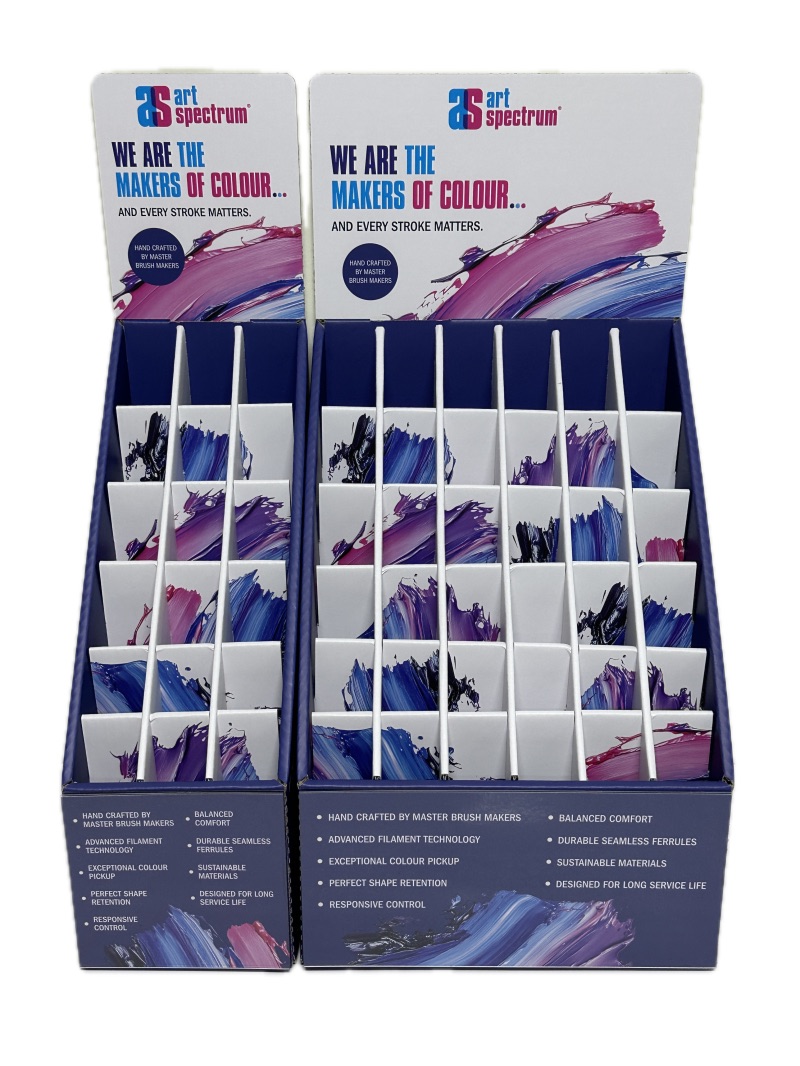
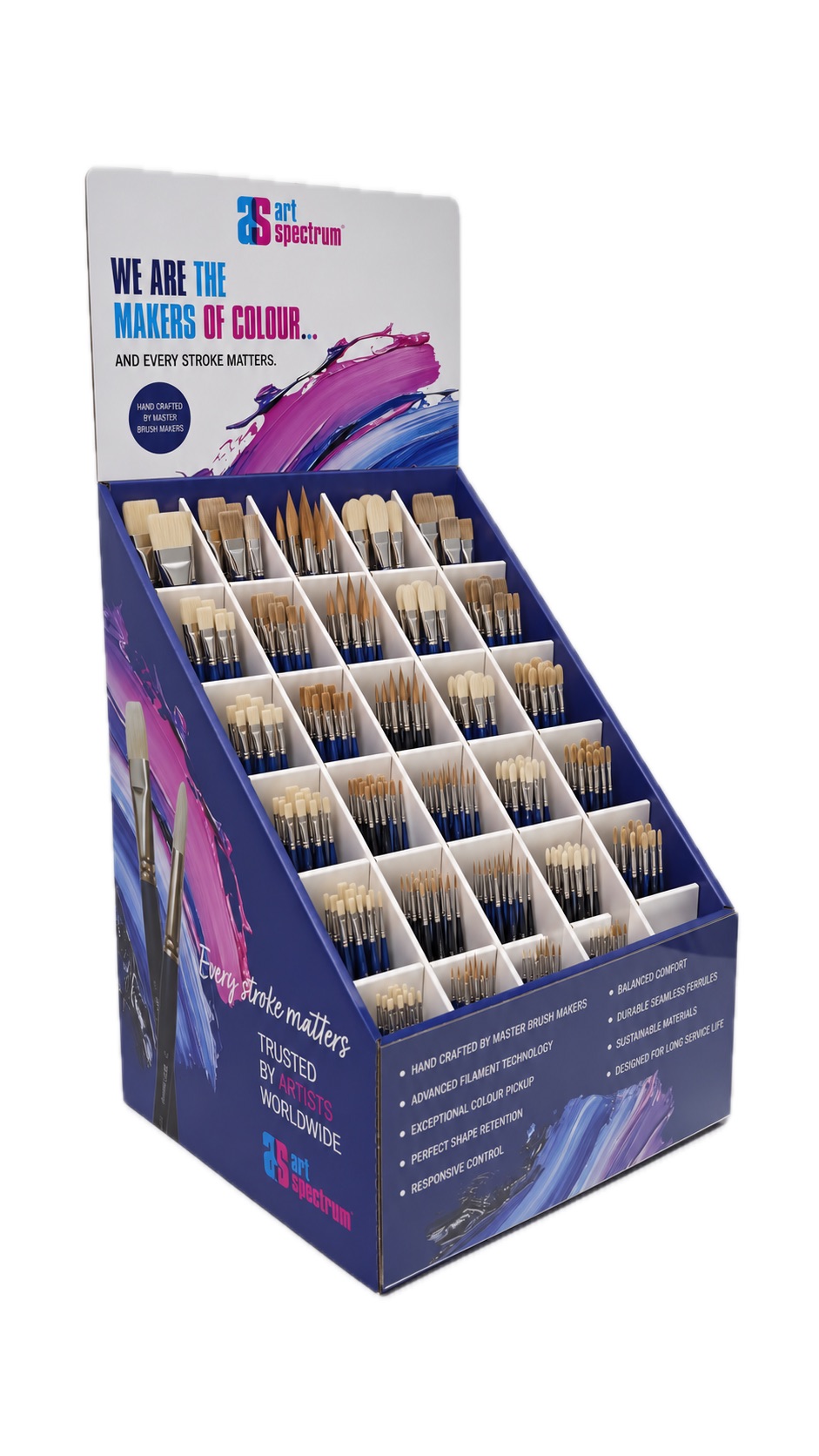
Timber gave the brand a box. Cardboard gave it a canvas. Every surface now carries vibrant, full-colour graphics: the “We are the makers of colour” header, bold paint strokes in the brand colours, and a front panel that lists what makes the brushes worth buying, from hand-crafted construction to sustainable materials. Even the pocket dividers are printed, so the display looks finished from every angle, stocked or not.
It slashed distribution costs
The display ships to stores flat-packed, so it takes up a fraction of the space and weight of a built timber unit. Store staff simply fold it together on site.
Prototyping the design
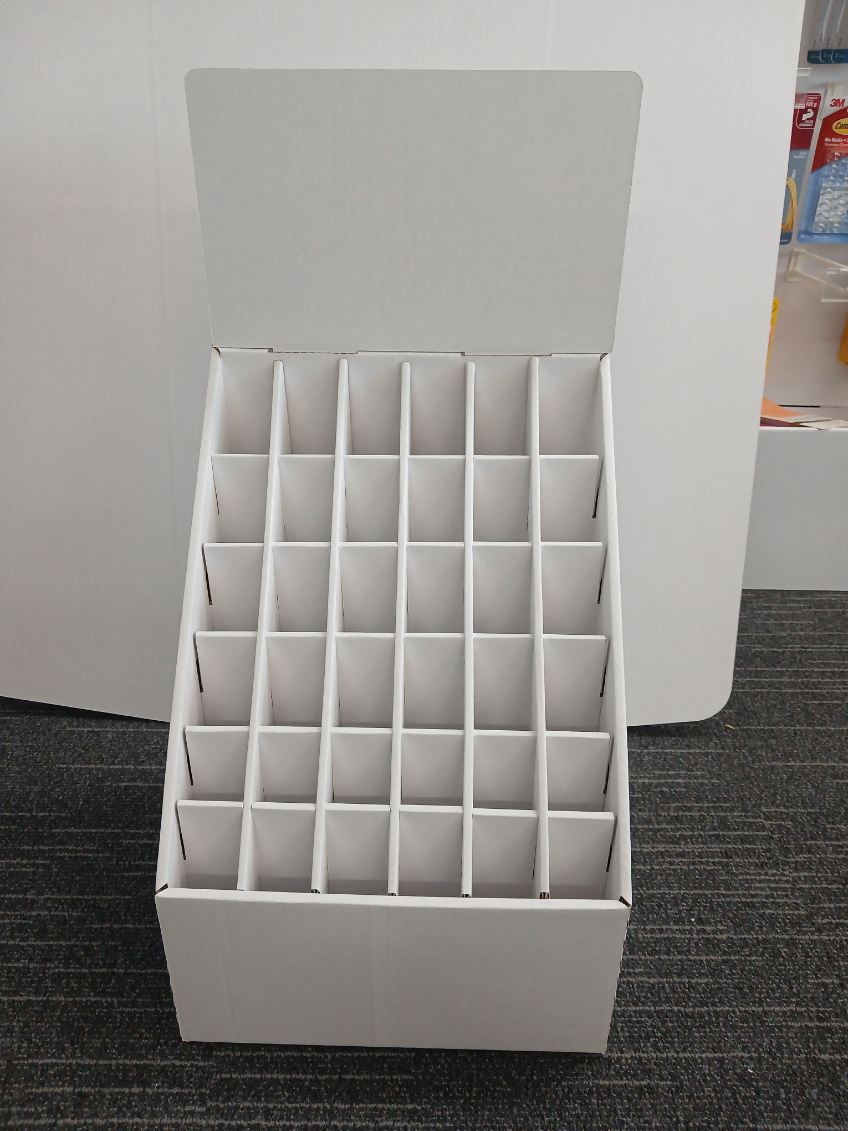
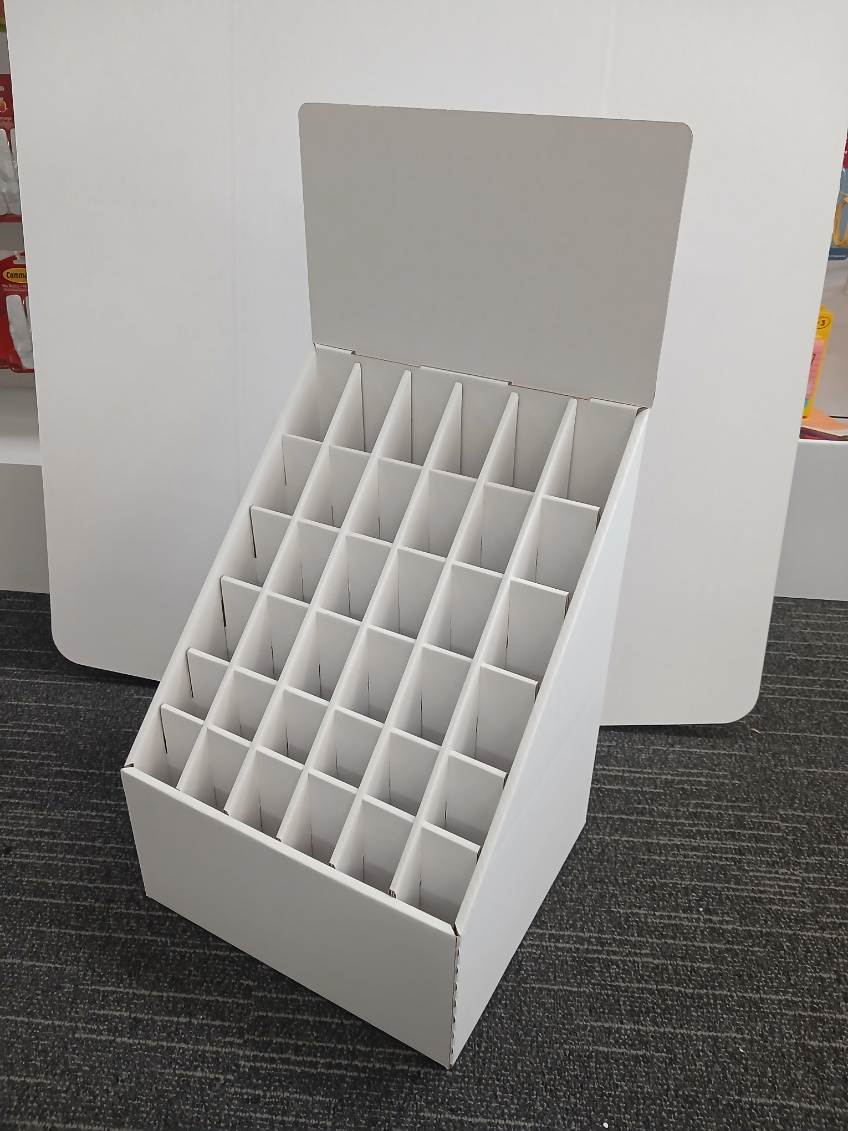
We didn’t go straight to print. As we always do, we built several plain white prototypes to test the options before settling on the final design. The prototypes let us check:
- that each pocket suits the length and width of the brushes it holds
- that the stepped rows keep every brush visible from the front
- that the unit stands firm on a counter or shelf when fully loaded
- that it folds flat and goes together easily in store
Two sizes for small, medium and large retailers
Not every art store has the same counter space or carries the same range. Using our experience making point of sale displays for large, medium and small store footprints, we recommended two sizes rather than one:
- A compact size for smaller stores or a tight counter.
- A larger size with room for the full brush range in medium and large retailers.
Both share the same graphics, so the brand looks the same wherever it appears. Retailers get the size that fits their store and their range.
What the finished display delivers
- Lower cost per display. Printed cardboard costs a fraction of timber, so the display earns back its cost sooner.
- Lower freight. Flat-packed units are cheaper to send to stores across the country.
- More impact in store. Bold colour and clear product messages give shoppers a reason to stop and browse.
- Stocking flexibility. Two sizes fit small, medium and large retailers.
- Easy to refresh. New graphics can be printed for a new range or campaign without building a new unit from scratch.
Why this matters for slow-moving products or categories
A display for a slow-moving product has to work harder for its money. If it costs too much to make and send, it can take years to pay for itself. If it looks plain, it doesn’t help sell anything at all. The right material, the right size and the right graphics can fix both problems at once. That’s what we set out to do for Art Spectrum.
If your displays cost more than they return, talk to us about a lower-cost option that still stands out on the shelf.
Let’s make a display that pays its way.